

Last updated October 30, 2026
 House lockouts
 Re-keying
 Deadbolt upgrades
 Smart locks
 Schlage
 Kwikset
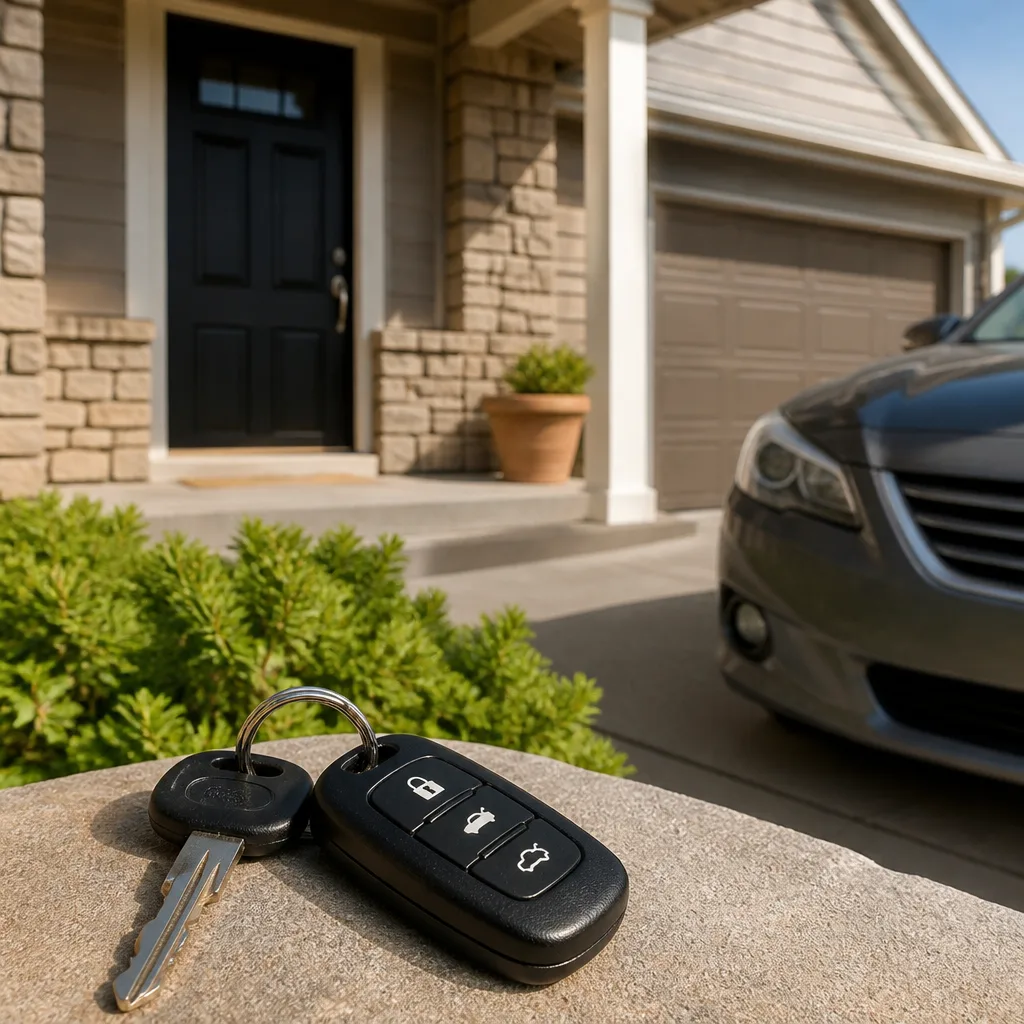 Car keys & fobs
Non-destructive entry first, always - and we re-key Schlage, Kwikset, and Baldwin locks on the spot while you watch
You get a price before we start. It does not change when we arrive. No surprises.
Get your free estimateCar Key Replacement Troubleshooting: Common Problems and How to Fix Them
Your new key turns in the ignition but the car won’t start. That’s not a bad key. That’s an unprogrammed transponder chip, and it happens to roughly one in five DIY replacement attempts. Before you blame the key cutter or order another blank, know this: most “faulty” replacement keys fail because a programming step was skipped, a battery was overlooked, or the vehicle’s anti-theft system did exactly what it was designed to do. This guide walks through every common failure point, shows you how to diagnose what actually went wrong, and tells you what to do next. For a deeper dive, see our Complete Car Key Replacement Guide for Anaheim Homeowners. As a locksmith team serving Anaheim, we’ve seen every variation of these problems, from Honda transponders in Fullerton to push-button start systems in Yorba Linda. This guide covers it all.
Styles & brands we work with
Quick Answer
If a replacement car key doesn’t work, the problem is almost always one of four things: an unprogrammed transponder chip, a dead key fob battery, a vehicle anti-theft system that needs a reset cycle, or a mechanical issue with the key cut itself. Start by testing the key manually in the door lock. If it turns there but won’t start the car, the issue is electronic, not mechanical. If it won’t turn anywhere, the key cut is wrong. Most electronic failures take under 30 minutes to resolve once correctly diagnosed.
Table of Contents
- The Symptom-to-Cause Diagnostic Tree
- Key Won’t Turn: Cut Problems and Cylinder Issues
- Key Turns but Car Won’t Start: Transponder and Chip Failures
- The Master Key Problem: Programming Without the Original
- The 30-Minute Relearn Cycle That Fixes Most Anti-Theft Lockouts
- Remote Works but the Key Doesn’t: Programming Done in Layers
- Low Car Battery and Failing Immobilizer: When a Good Key Looks Bad
- Door Lock Cylinder vs. Key: The Two-Minute Test
- Common Mistakes to Avoid
- When to Call a Professional
- Frequently Asked Questions
- The Bottom Line
The Symptom-to-Cause Diagnostic Tree
Every car key failure presents as one of four symptoms. Each points to a different root cause. Here is the diagnostic framework we use, and it works for any vehicle from a 2002 Toyota to a 2024 push-button system.
First, match your symptom. Then follow the branch.
- Key won’t turn in the door or ignition at all. This is mechanical. The cut is wrong, the blank is wrong, or the key was cut from a worn duplicate rather than the factory code.
- Key turns in the door and ignition, but the car won’t start. This is electronic. The transponder chip is not programmed to the vehicle, or the vehicle’s immobilizer is not recognizing it.
- Key starts the car, but the remote buttons do nothing. The key blade is working and the transponder is working, but the remote control function was never paired, or the fob battery is dead.
- Remote buttons work (doors lock and unlock), but the key won’t start the car. The key blade may be cut incorrectly, or the transponder chip is missing or unprogrammed. The remote and the transponder are separate systems.
In Anaheim and across Orange County, we see all four symptoms regularly. The third and fourth are the most misdiagnosed because owners assume one part of the key working means all parts work. They are separate circuits. A key with a working remote can still have a dead transponder, and a key with a working transponder can still have an unpaired remote.
Here is a simplified tree to work through:
- Does the key turn in the driver’s door? No? The cut is wrong. Yes? Go to step 2.
- Does the key turn in the ignition? No? The cut is wrong, or the ignition cylinder is worn. Yes? Go to step 3.
- Does the car crank when you turn the key? No? The transponder is not being read. Go to step 4. Yes, it cranks but won’t fire? This could be a transponder issue or a fuel/spark issue. If the original key behaves the same way, the problem is the car, not the key. If the original key starts fine, the replacement transponder is not programmed.
- Is the security light on the dashboard blinking or staying solid? If yes, the anti-theft system is active and blocking the start. The vehicle does not recognize the replacement key. If no light, the chip may be missing entirely from the key housing.
This tree resolves over 90% of cases without touching a diagnostic tool. The remaining 10% involve immobilizer module failures or damaged inductive rings around the ignition cylinder, which we cover below.
Key Won’t Turn: Cut Problems and Cylinder Issues
When a replacement key won’t turn, most people assume the key is defective. In our experience, the cause is usually one of three things, and only the first is actually the key’s fault.
1. The key was cut from a worn original. If your original key is ten years old, its cuts have worn down, maybe by a few thousandths of an inch. A locksmith or hardware store that copies that worn key is copying wear, not the factory code. The new key may look right but fails to align the lock’s internal pins. We see this constantly with older Honda and Toyota keys around Anaheim, where cars last 200,000 miles and keys last just as long. The fix is to have the key cut by code, not by copy. The factory key code, often recorded in the owner’s manual or retrievable from the dealer with proof of ownership, produces a perfect cut every time.
2. The blank is the wrong profile. This sounds obvious, but generic aftermarket blanks are marketed as fitting more vehicles than they actually do. A blank that is 0.5mm too thick or has the wrong side groove will go partway into the cylinder and stop. If you have a premium or European vehicle, this is even more common. The fix is to use the correct OEM-spec blank for your exact year, make, and model.
3. The ignition cylinder itself is worn. Older vehicles in Anaheim, especially those parked outdoors in our sun and heat, develop worn ignition wafers over time. A key that is cut correctly can still bind in a cylinder with worn internals. The two-minute test: try the key in the door lock. If it turns smoothly there but binds in the ignition, the key is fine and the cylinder is the problem. If it binds in both, the key cut is suspect.
We also see this with lubricant buildup. Do not spray WD-40 into an ignition cylinder. It attracts dust and gums up the wafers. Use a dry graphite lubricant or have the cylinder cleaned professionally.
Key Turns but Car Won’t Start: Transponder and Chip Failures
Most cars built after 1996 have a transponder system. Inside the plastic head of your key is a small chip, about the size of a grain of rice, that sends a unique code to the vehicle’s immobilizer module when the key is near the ignition. If the module doesn’t receive the correct code, the car either won’t crank at all or it cranks but won’t fire.
A replacement key that turns but doesn’t start the car has one of four problems:
- The chip was never programmed. This is the most common issue with keys purchased online or cut at a hardware kiosk. The key was cut, but no programming step was performed. On some vehicles, the key needs to be paired to the immobilizer using a diagnostic tool. On others, there is an onboard programming procedure. Either way, a cut without programming is just a metal key.
- The chip is missing entirely. Some cheap replacement keys sold online are hollow shells with no transponder inside. If your existing key has a chip and the replacement does not, it will never start the car.
- The chip is the wrong type. Different vehicles use different transponder types: fixed code, rolling code, encrypted, and proximity-based. A chip from the wrong system will not communicate with your car, even if it is the right physical shape.
- The programming was attempted but failed partway. Some vehicles require a sequence of steps with specific timing. If the sequence was interrupted, or if the battery voltage dropped during programming, the pairing fails silently. The key turns, the car doesn’t start, and there’s no obvious error.
Here is what to do: check for a security light. If the immobilizer light, usually shaped like a car with a key inside, is blinking rapidly or staying solid when you try to start, the car is actively rejecting the key. That confirms the transponder is the issue. If the light is off, the chip may be missing or the inductive ring around the ignition is failing, which we cover below.
Programming a transponder on most vehicles requires a diagnostic tool, and many require a working original key to authorize the process. That’s the master key problem, which is next.
For a deeper look at how transponder programming works and what it costs, see our guide on Car Key Replacement in Anaheim.
The Master Key Problem: Programming Without the Original
Many vehicles, particularly older Toyotas, Hondas, Fords, and Nissans, have an onboard programming procedure that lets an owner add a new key without special tools. The catch: the procedure requires you to have at least one working, already-programmed key present. That working key is the master.
If you have already lost your only key, the onboard procedure will not work. The vehicle’s immobilizer is designed to prevent exactly this scenario: someone with an unprogrammed key and no authorization cannot add a new key to the system. The vehicle has no way to verify you are the owner.
There are two paths forward from here:
- Dealer or automotive locksmith with a programming tool. A diagnostic programmer connects to the vehicle’s OBD-II port and writes the new key data directly to the immobilizer module. This is called resetting or reflashing the immobilizer. It wipes the old keys and registers the new one. This is available to automotive locksmiths who have invested in the right equipment, and it typically costs less than a dealership service.
- Replace the immobilizer module and its matched keys. On some vehicles, particularly older models, the immobilizer cannot accept new keys through the OBD port. The module must be replaced along with the matched key set. This is a more expensive route and is generally only necessary on specific older imports.
If you still have your master key and it is wearing out, get a duplicate made now while the master still works. The cost of duplicating a working key is a fraction of the cost of replacing a lost one. In Anaheim, we regularly tell customers this: the cheapest time to make a car key is before you need one.
Our Anaheim Locksmiths home page covers the full range of services, including emergency key replacement when the master is already gone.
The 30-Minute Relearn Cycle That Fixes Most Anti-Theft Lockouts
Here is something most car owners don’t know, and it solves a surprisingly large number of “bad key” complaints: when a vehicle’s anti-theft system detects a problem, it often enters a lockout mode. In this mode, even a correctly programmed key will not start the car. The system needs to complete a relearn cycle, which on many vehicles takes about 30 minutes.
This happens most commonly when:
- A replacement key was attempted with the wrong chip, triggering the anti-theft system.
- The battery went completely dead while a key was in the ignition.
- A programming attempt was interrupted midway, leaving the immobilizer in an uncertain state.
- The car was jump-started after a dead battery, and the immobilizer lost its reference data.
The relearn procedure on most vehicles is simple:
- Insert the correctly cut key into the ignition and turn it to the ON position, which is the position just before the starter engages. Do not start the car.
- Leave the key in that position. The security light will usually stay on or blink during this time. Do not turn the key off. Do not open the door. Let the system sit.
- Wait. On many GM vehicles, the light goes out after about 10 minutes. On many Fords and Chryslers, the full cycle takes 30 minutes. Some vehicles require the procedure to be repeated three times for a total of 30 minutes.
- When the security light goes out, turn the key to OFF, then try to start the car normally.
This procedure varies by vehicle, and you should check your owner’s manual for the specific sequence for your model. But in our experience, if the car has entered anti-theft lockout, the 30-minute relearn cycle clears it in about three out of four cases. It costs nothing and requires no tools. It is also the first thing we try in the field before breaking out diagnostic equipment.
If the relearn cycle does not work, the anti-theft system may have a stored fault that requires a scan tool to clear. That is a Emergency Locksmith in Anaheim situation, not a DIY one.
Remote Works but the Key Doesn’t: Programming Done in Layers
One of the most common calls we get in Anaheim sounds like this: “My remote unlock works, but when I put the key in and turn it, nothing happens.” People assume the key and the remote are one system. They are not.
A modern car key has three independent functions, and each one is programmed separately:
- The mechanical blade. It operates the door lock and ignition cylinder. If the cut is correct, it turns. There is no programming for this layer, only cutting.
- The remote control function. The buttons that lock and unlock the doors run on a radio frequency. This is programmed separately from the transponder. A key can have a working remote while the transponder is dead or unprogrammed.
- The transponder chip. This is the immobilizer handshake that tells the car it is allowed to start. It is passive, meaning it does not need a battery in the key. It is powered inductively by the ring around the ignition cylinder.
So a key with working remote buttons and a dead transponder behaves exactly like this: the doors lock and unlock remotely, the key turns in the ignition, but the car will not start. The remote layer is fine. The transponder layer is not.
The fix is to program the transponder. If this key was purchased as a complete replacement and programmed by a locksmith, that programming step was either skipped or failed. Bring it back and have the transponder registered to the vehicle. If this is a DIY key, you will need a programming tool or a locksmith with one.
The reverse also happens: the transponder is programmed and the car starts, but the remote buttons do nothing. In that case, the key starts the car but does not lock or unlock the doors remotely. The remote pairing procedure is often separate and may require a specific button sequence. Some vehicles pair the remote automatically when the transponder is programmed. Others do not. Either way, the fix is independent of the transponder layer.
Low Car Battery and Failing Immobilizer: When a Good Key Looks Bad
Sometimes the replacement key is perfectly fine. The car is the problem. Two vehicle-side issues commonly masquerade as key failures, and they fool professionals too.
Low car battery. This one catches people off guard. A car battery that is weak but not dead may still power the dash lights and even crank the starter slowly, but the voltage drop during cranking can starve the immobilizer module. The module fails to read the transponder, the car refuses to start, and the owner blames the new key. If your original key also fails to start the car, or if the starts have been getting slower over the past week, charge or replace the battery before doing anything with the key. We have seen more than one Anaheim customer spend money on a second replacement key when the real problem was a battery that cost a third as much.
Failing immobilizer module or inductive ring. The ring around the ignition cylinder is an antenna. It sends power to the transponder chip and receives its code. If that ring is cracked, corroded, or disconnected, no key will be read. The symptom is dramatic: no key works, the security light stays on, and the car will not crank. This problem is often misdiagnosed as a locked immobilizer that needs replacement, when the actual fix is a $50 antenna coil. A diagnostic scan can tell the difference. If the module is communicating with the scan tool but not reading any key, the ring is suspect. If the module itself is dead, the vehicle needs a new immobilizer and key programming. That is a job for an automotive locksmith with the right tools.
The takeaway: if a replacement key fails to work, test the vehicle with a known-good key before concluding the replacement is at fault. If a key that worked yesterday does not work today, the problem is rarely the key.
Door Lock Cylinder vs. Key: The Two-Minute Test
Here is a diagnostic method that solves a surprising number of puzzles, and it takes under two minutes. Use the driver’s door lock as your reference.
The ignition cylinder and the door lock cylinder on most vehicles are keyed differently. The door cylinder usually uses fewer wafers, which makes it more forgiving. The ignition cylinder uses more wafers, which makes it more precise. This difference is useful.
Here is the test:
- Try the replacement key in the driver’s door. Does it turn easily, with normal effort? If yes, the key cut is probably correct. The blank profile fits, the cuts align, and the key is not the problem.
- Now try the same key in the ignition. Does it bind, catch, or refuse to turn? If the door lock works but the ignition doesn’t, the problem is the ignition cylinder, not the key. The ignition cylinder may be worn or damaged.
- Try the original key, if you still have it, in the same ignition. If the original key works and the replacement does not, the replacement cut is off by a small amount. If the original key also fails, the ignition cylinder is worn.
Two caveats. First, this only works on vehicles that still have a mechanical key. Push-button start vehicles have no traditional ignition cylinder, and some newer vehicles have no door keyhole at all. Second, if the vehicle has been rekeyed at some point in its life, the door and ignition cylinders may not match, which makes the door test less reliable.
In Anaheim, where many older used vehicles change hands, mismatched cylinders are more common than people expect. If the door key works but the ignition key is different, the vehicle may have had a lock replaced at some point. A locksmith can inspect both cylinders and advise whether the key is wrong or the hardware is worn.
For lock cylinder work and full rekeying, see our Rekey Locks in Anaheim page.
Common Mistakes to Avoid
These are the missteps we see most often from vehicle owners trying to troubleshoot a replacement key in Anaheim, and each one usually makes the problem worse or costs money that didn’t need to be spent.
- Blaming the key before testing the car. If the original key also fails, the problem is the vehicle. Test both keys before ordering a replacement for a replacement.
- Using a hardware-store copy of a worn key. Copying a worn key copies the wear. The new key may fail immediately or within a few months as the cylinder tolerances shift. Cut by code instead.
- Skipping the relearn cycle. An anti-theft lockout often clears on its own with a 30-minute relearn. Jumping straight to ordering new parts skips the free fix.
- Buying the cheapest blank online. Generic blanks are not always machined to the correct tolerances. A blank that is visually similar can bind, fail to seat, or prevent the transponder from reading correctly.
- Programming the remote but not the transponder. On many vehicles these are separate procedures. A key can have working buttons and a dead start. Ask what was programmed, not just whether it was programmed.
- Ignoring the car battery. A weak battery can cause immobilizer read failures that look exactly like a bad key. If the dash lights are dim or the cranking is slow, fix the battery first.
When to Call a Professional
Some key problems are genuinely fixable at home: a dead fob battery, a relearn cycle, a door-cylinder test. For more guides & resources, see our blog. But these situations call for a professional with automotive diagnostic equipment, and they are not worth attempting with a DIY approach.
If the anti-theft system will not release after a full relearn cycle, or if no key works including the original, the vehicle needs a scan. If you have lost your only key and the vehicle requires a master, programming requires a diagnostic tool. If the key turns but the car cranks without starting and the security light is blinking, the transponder was never programmed correctly. If the ignition cylinder binds with every key, the cylinder itself needs repair.
Anaheim Locksmiths offers free estimates in Anaheim – call (855) 382-0290. We carry the programming equipment for most makes and models and can diagnose a key failure on site.
Frequently Asked Questions
The cost depends on what has failed. A fob battery is under $10. A transponder programming session typically runs $50 to $150. A full key replacement with a new transponder and programming usually runs $150 to $350 for common vehicles, and more for premium or push-button systems. Call (855) 382-0290 for an exact quote. Estimates are free, and we quote the full price before anyone is dispatched.
Yes. We quote the full price on the phone before anyone is sent out, and that is the price on the invoice. There is no call-out surcharge added on arrival. If an unexpected problem is found on site, we stop and re-quote before doing any additional work.
In most cases, yes. If the key was cut but not programmed, programming usually takes under an hour. If a new key needs to be cut and programmed, we can often complete it the same day at our Anaheim location or on a mobile call. The only exception is a vehicle that requires a specific key blank we need to order, which is rare for common makes and models.
We work across the full range of automotive key technologies: traditional cut keys, transponder keys, remote-head keys, and push-button proximity keys. We also carry programming equipment for the major manufacturers. If you are unsure, call (855) 382-0290 with your year, make, and model, and we will tell you exactly what we can do before you commit to anything.
That usually points to a worn ignition cylinder, not a bad key. It is also possible the vehicle has a replacement cylinder that does not match the door locks. We can inspect both cylinders and tell you which one is the problem.
Yes. We cover Anaheim and the surrounding Orange County communities, including Fullerton, Orange, Garden Grove, Santa Ana, and Yorba Linda. Key problems do not usually wait for business hours, and our emergency service reflects that.
The Bottom Line
Replacement car key problems almost always come down to four causes: a mechanical key cut issue, an unprogrammed transponder, a dead remote battery, or a vehicle-side failure like a weak battery or immobilizer fault. Diagnose the symptom first. Test the key in the door lock. Check the security light. Try the 30-minute relearn cycle. If the original key works and the replacement does not, the replacement is the issue. If no key works, the car is the issue. And if you hit a wall, stop and call us. We are a full-spectrum locksmith team in Anaheim, equipped for automotive key replacement, emergency lockouts, and rekeying across the security spectrum, from everyday Schlage and Kwikset hardware to high-security systems like Medeco and Abloy. One call covers it.
Written by the team at Anaheim Locksmiths, serving Anaheim since 2015.