

Last updated October 30, 2026
 House lockouts
 Re-keying
 Deadbolt upgrades
 Smart locks
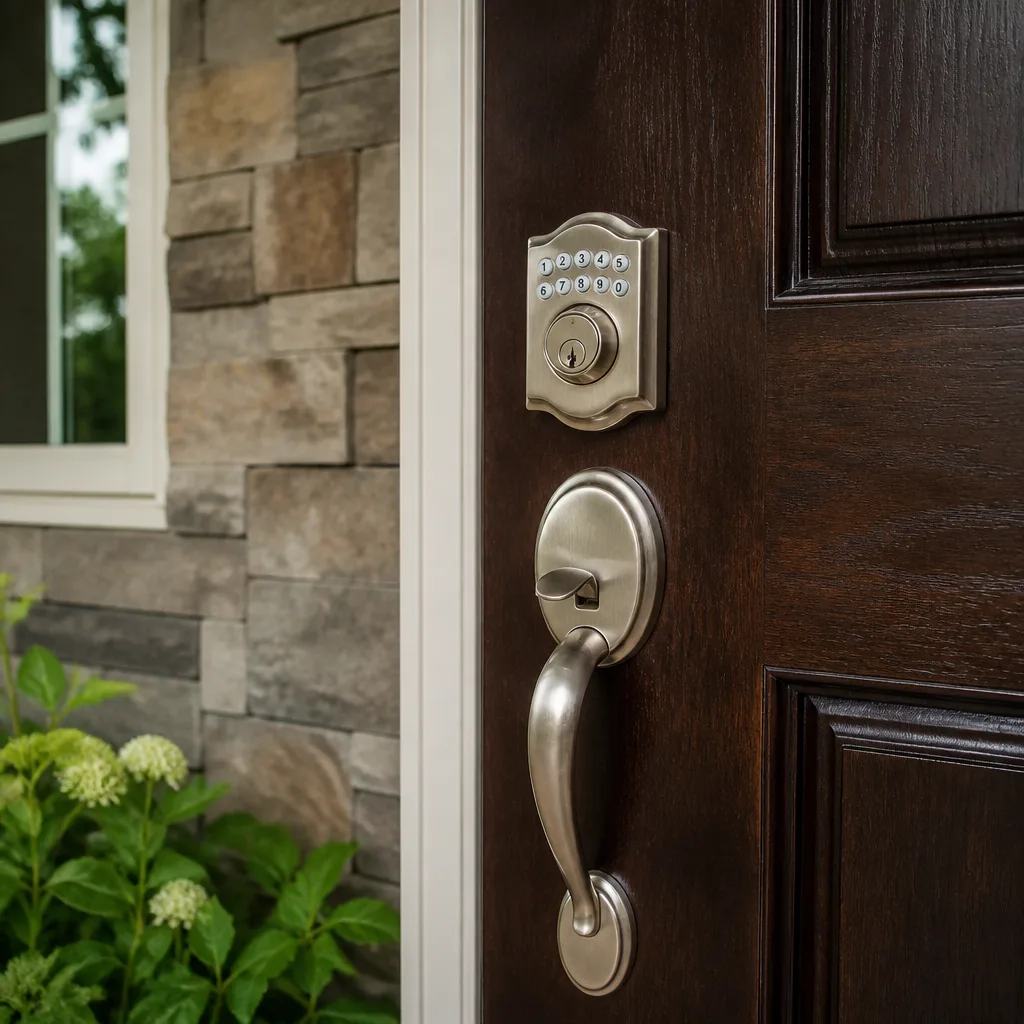 Schlage
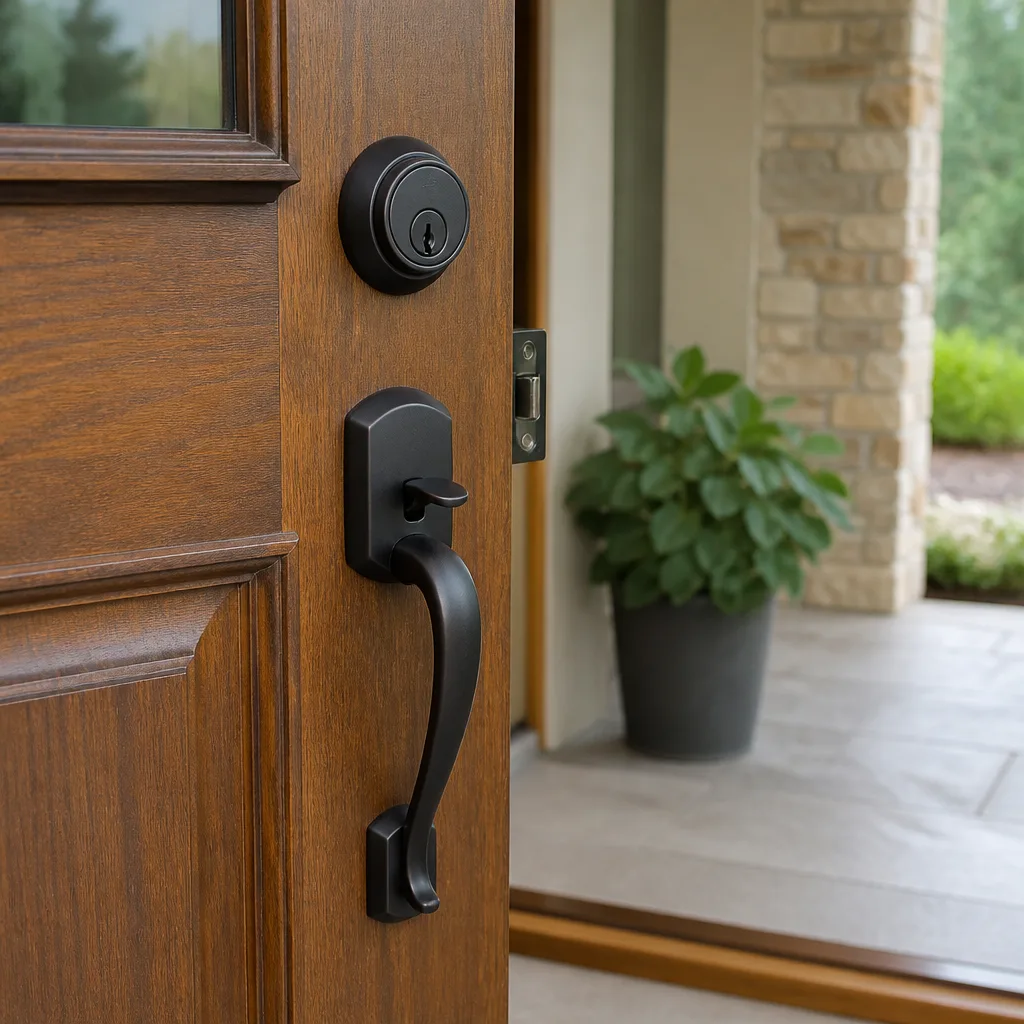 Kwikset
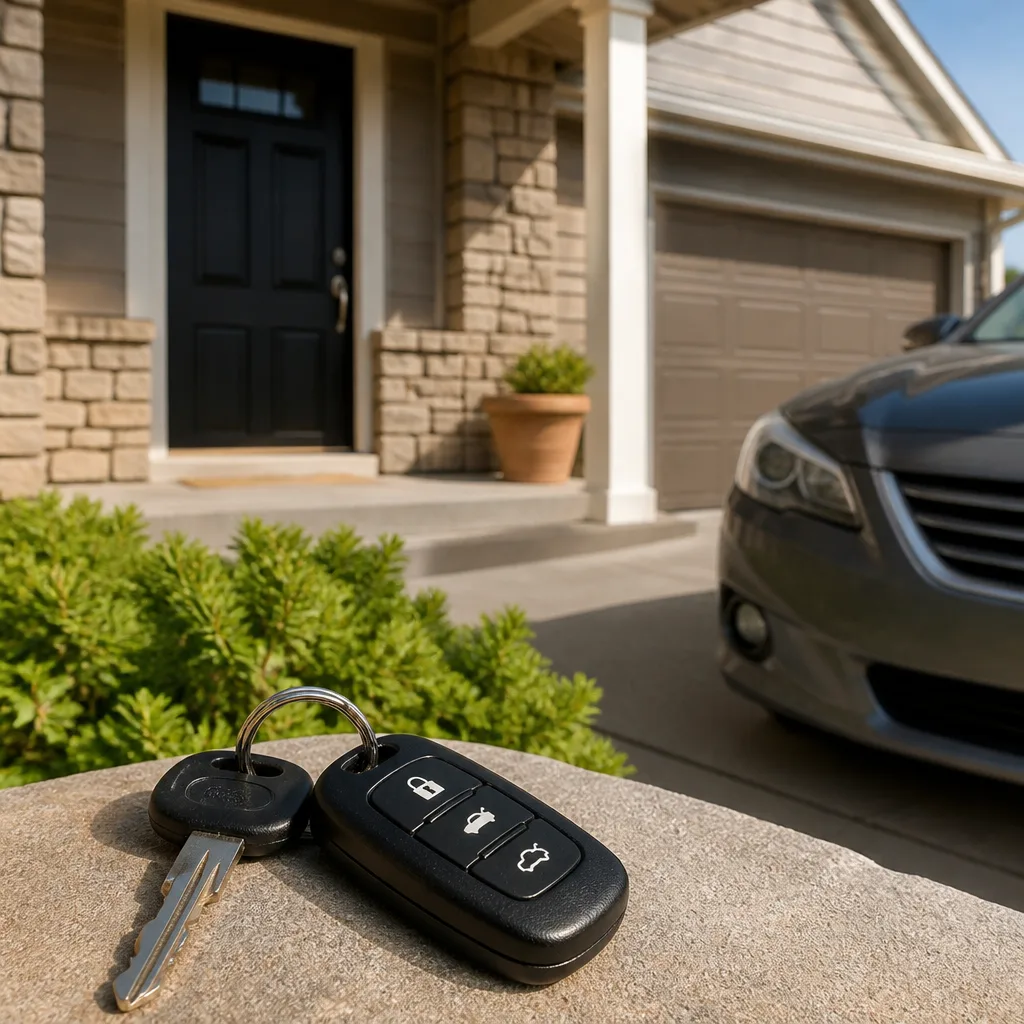 Car keys & fobs
Non-destructive entry first, always - and we re-key Schlage, Kwikset, and Baldwin locks on the spot while you watch
You get a price before we start. It does not change when we arrive. No surprises.
Get your free estimateCar Key Replacement Maintenance Checklist for Anaheim Homeowners
The average transponder key replacement in Southern California runs somewhere between $200 and $400 at a locksmith, and often twice that at a dealership. What almost nobody tells you is that most of those replacements were preventable. Six months before the key dies completely, it usually sends signals: a button that needs a second press, an ignition that hesitates, a fob that only works from ten feet instead of fifty. This guide is a practical maintenance routine for Anaheim homeowners who would rather spend fifteen minutes twice a year than face a stranded-at-the-grocery-store emergency on a 98-degree afternoon. For more guides & resources, see our blog.
Styles & brands we work with
Quick Answer
A car key maintenance routine for Anaheim homeowners comes down to six things: inspect the physical key blade for wear every six months, replace fob batteries before they die (heat shortens their life here), test all buttons and proximity functions monthly, document your key type and FCC ID today, address ignition cylinder stiffness immediately, and make a spare key while the original still works. Doing this takes less than twenty minutes twice a year and can prevent a $200-$400 emergency replacement.
Table of Contents
- The Warning Signs Most Anaheim Drivers Miss
- The Six-Month Visual and Functional Checklist
- Why Anaheim Heat Kills Keys Faster Than You Think
- When to Clone or Copy a Key Before It Fails
- How to Document Your Key Type and FCC ID
- What Maintenance Actually Means for Smart Keys and Push-Button Start
- Ignition Cylinder Wear: The Silent Budget Killer
- Common Mistakes to Avoid
- When to Call a Professional
- Frequently Asked Questions
- The Bottom Line
The Warning Signs Most Anaheim Drivers Miss
Every failed car key tells a story that started months earlier. In our work with car key replacement in Anaheim, we rarely see keys that died without warning. What we see are warnings that went unread. The key fob button that needed an extra press in March becomes the dead fob in August. The key blade that felt a little loose in the ignition in January becomes the snapped key in June. Learning to read these signals is the difference between a planned $15 fix and an unplanned $300 tow plus replacement.
Here are the signals that deserve attention, ranked by how often Anaheim drivers ignore them:
- Reduced remote range. When your fob used to unlock the car from across the Disneyland parking structure and now only works from twenty feet, the battery is fading. Most people adapt to this without noticing. Test it monthly.
- Button hesitation. A lock or unlock button that requires two presses is not a quirky personality trait. It is a dying battery or a worn internal contact. Both are cheap to fix now and expensive to ignore.
- Ignition resistance. If the key doesn’t turn smoothly, or you have to wiggle it, the key blade is wearing down or the ignition cylinder is developing wear. This is the single most predictive sign of a future key break. Address it within two weeks.
- Physical key blade wear. Hold the key up to light. If the cuts look rounded instead of crisp, or the blade is thinning, the key is approaching end of life. A worn blade can snap inside the lock cylinder, turning a $5 copy into a $150 extraction and replacement.
- Intermittent start failures. For transponder keys, a car that sometimes cranks but doesn’t start, or a push-button start that occasionally says “key not detected,” points to a failing transponder chip or a weak fob battery. Modern transponder chips rarely fail suddenly. They fade.
- Cracked fob housing. A cracked plastic shell exposes the internal circuit board to Anaheim’s dry heat and dust. Once the board corrodes, the entire fob often needs replacement. A replacement shell costs $10 and takes five minutes.
None of these signs requires mechanical skill to spot. They require attention. The problem is that car keys live in pockets and purses and cup holders, so nobody looks at them until the moment they stop working.
The Six-Month Visual and Functional Checklist
Twice a year is enough. Set a phone reminder for every March and September, when Anaheim’s weather tends to shift. The whole routine takes less than twenty minutes per vehicle. Do it with your key, your spare key, and your owner’s manual in front of you.
- Visual inspection of the key blade. Hold the blade under a bright light. Look at the cuts. Are the edges crisp or rounded? A new key has sharp, well-defined cut steps. A worn key looks smoothed over, almost like it has been sanded. This is the number-one predictor of an imminent snap.
- Visual inspection of the fob housing. Check for hairline cracks, especially around the key ring attachment point and the button openings. Flex the housing gently. Does it creak? A compromised housing lets dust and moisture into the circuit board.
- Battery test. The easiest test is range. Park the car, move thirty feet away, and press unlock. If the car doesn’t respond at thirty feet, replace the battery. A healthy fob on a full battery typically works reliably at fifty feet or more with no obstruction.
- Button response test. Press each button five times in quick succession. Every press should register instantly. If you get a missed press, don’t ignore it. Batteries are under $5 and replacement takes two minutes.
- Ignition smoothness test. Insert the key and turn it slowly through each position. It should move with even, consistent resistance and no grinding, sticking, or need for extra force. If you feel anything unusual, note it. Also test the push-button start if your vehicle has one: it should engage on the first press every time.
- Spare key verification. Go find the spare key, wherever it lives, and repeat steps one through five on it. A spare that has been in a drawer for three years has a dead battery and a potentially degraded transponder chip. A spare that doesn’t work is not a spare.
- Documentation update. While both keys are in front of you, take a photo of each key blade and make a note of the fob’s FCC ID, the vehicle’s VIN, and the key type. Store this note in a cloud photo album or a labeled drawer. If a key is ever lost, this information cuts replacement time from hours to minutes.
This checklist works for any Anaheim Locksmiths home vehicle owner regardless of key type. It costs nothing but time, and it surfaces 90% of the issues that lead to full replacement.
Why Anaheim Heat Kills Keys Faster Than You Think
Anaheim regularly sees summer days above 95°F, and the interior of a parked car can reach 140°F to 160°F within an hour. That heat does three specific things to car keys, and almost no national maintenance guide accounts for any of them. National averages assume a temperate climate. Anaheim is not a temperate climate.
First, heat accelerates battery capacity loss. The lithium coin cell inside most key fobs is rated for two to three years at room temperature. But every 15°F increase above 70°F roughly halves the effective service life. A fob that lives in a car parked in direct Anaheim sun on a 100-degree day is baking at 150°F inside the cabin. That battery that should last three years may last eighteen months, sometimes less. If you park outdoors without covered parking, expect to replace your fob battery every twelve to eighteen months, not every two to three years.
Second, thermal cycling degrades the transponder chip adhesive and solder joints. The transponder unit inside a modern key is a small electronic module. Repeated expansion and contraction from 50-degree winter nights to 150-degree summer interiors stresses the internal solder connections and the adhesive that holds the chip in place. Over two or three Anaheim summers, this thermal stress can cause micro-cracks in solder joints, leading to intermittent “key not detected” warnings or random start failures. This is not a failure mode most drivers associate with heat, but in our experience with Anaheim vehicles, it is one of the most common.
Third, heat embrittles the plastic housing. Key fob plastics are formulated for general use, not sustained high-heat exposure. Years of 140°F cabin temperatures make the plastic brittle. That is why fobs in sun-belt cities crack more often than identical fobs in coastal or northern climates. A cracked housing in Anaheim is not an accident. It is chemistry.
The practical takeaway: if you park outdoors in Anaheim, treat twelve to eighteen months as your fob battery replacement interval, not two to three years. And keep the fob out of direct sunlight inside the car whenever possible. The glove box or center console is significantly cooler than a dash-mounted phone cradle.
When to Clone or Copy a Key Before It Fails
Most Anaheim drivers think about Car Key Replacement services when the key is already dead. By then, the situation is an emergency: the car won’t start, a tow may be required, and the owner pays whatever the market demands at that moment. The alternative is to copy or clone the key while it still works, which is always cheaper and usually takes under an hour. Here are the moments when copying a key before failure is the right move.
When the blade shows visible wear but still works. If the six-month inspection reveals rounded cuts or a thinning blade, copy the key now. A basic non-transponder key can often be cut in minutes. A transponder key can be cloned from the existing key while it still functions. Once the key snaps inside the ignition, the cost includes extraction labor and possibly cylinder repair. The copy costs a fraction of that.
When you have only one working key. This is the largest single risk factor for expensive replacement. If you have one key and lose it, you are looking at a tow and a full key programming service. If you have two keys and lose one, the remaining key can be used to program a new one on many vehicles, dramatically reducing cost. Every Anaheim driver with a single key should make a spare this month. Not next month. This month.
When the fob housing shows cracks. The electronic internals may still be fine, but the cracked housing will fail. Copy the key or replace the housing before the internals get damaged. A cracked fob that still works is a $10 to $30 fix. A damaged circuit board is often a $150 to $300 replacement.
When you are planning a long trip. If a key fails on a road trip from Anaheim to Arizona or up the coast, you are at the mercy of whatever locksmith is available wherever the car stopped. Making a spare before the trip is the cheapest travel insurance that exists. Keep the spare in a separate bag, not on the same key ring.
When the key is more than four years old. Even without visible problems, a key that has survived four Anaheim summers is approaching the end of its reliable service life, especially if parked outdoors. The cost of a proactive copy is predictable. The cost of an emergency replacement is not.
How to Document Your Key Type and FCC ID
When a key is lost or dead, the first question any locksmith or dealer asks is: what kind of key does the vehicle use? Most owners cannot answer that question with any precision. That lack of information is what turns a 45-minute replacement into a multi-hour process that may involve towing. The fix takes ten minutes today.
Here is exactly what to document and where to find it:
- The vehicle year, make, and model. This seems obvious, but in a stressful moment, people forget their own year or confuse trims. Write it down: a 2021 Honda CR-V EX and a 2021 Honda CR-V LX may use different key systems.
- The key type. Is it a basic mechanical key, a transponder key (chip embedded in the plastic head), a flip key, a fob with an emergency blade, or a proximity smart key? Describe it in words: “push-button start, fob only, no metal blade visible.”
- The FCC ID printed on the back of the fob. Look for a three-character code, an FCC ID like “KR5V2X” or “CWTWB1U345”. This number identifies the exact radio frequency and protocol the fob uses. Write it down and photograph it. A locksmith can use the FCC ID to match a replacement fob before ever seeing the vehicle.
- The VIN. The vehicle identification number is on the driver’s side dashboard and on the driver’s door jamb sticker. The VIN allows a locksmith or dealer to verify key specifications and, for some vehicles, cut a key by code rather than from a worn duplicate.
- The key blade code (if you have it). Some vehicles ship with a small metal tag that has the key’s cut code. If you have that tag, store it in your documentation. It allows a locksmith to cut a brand-new, factory-spec key without needing a duplicate.
- A photo of the key and fob. A clear photo answers most questions faster than any verbal description. Store it in your phone’s cloud photo album so it is accessible even if the key and your wallet are both missing.
Keep this documentation in two places: a physical copy in a labeled home file, and a digital copy in a cloud folder that can be accessed from any device. When the day comes that a key needs replacing, this information means the difference between calling one locksmith and getting it handled, or calling around town trying to find someone who can identify the key from a vague description.
What Maintenance Actually Means for Smart Keys and Push-Button Start
Most car key maintenance guides ignore smart keys entirely, as if proximity fobs and push-button start systems never fail. They do fail, and when a smart key fails, the car does not start at all. There is no backup mechanical key path on many modern vehicles. Here is what proactive smart key maintenance looks like in Anaheim.
Battery replacement becomes a hard deadline, not a suggestion. A smart key fob is constantly broadcasting. It polls for the vehicle even when you are not near it, which means its battery drains when the car is parked in the garage. Combined with Anaheim heat, many smart fob batteries last twelve months or less. Replace the battery annually, every March, before summer heat compounds the problem. If the fob shows a low-battery warning on the dashboard, replace the battery within a week, not a month.
Physical button testing still applies. Even a smart key has buttons for lock, unlock, trunk, and panic. Test them monthly. If a button is slow or unresponsive, the issue is not just the battery but possibly a worn internal contact. The fob is a piece of electronics, and electronics eventually wear out.
Proximity detection range matters. A healthy smart key should be detected by the vehicle from a consistent distance. If you notice that you have to hold the fob closer to the door handle or the start button, the battery is fading or the antenna is weakening. This is the smart key equivalent of reduced fob range, and it is just as predictive.
Emergency blade awareness. Most smart key fobs have a hidden emergency mechanical blade, usually released by a small button or slide on the fob. Do you know how to release yours? Do you know where the hidden keyhole is on your car door? Most people do not until the fob battery dies at the worst possible moment. Locate both today. The blade itself can be copied: even a smart key fob’s emergency blade can be duplicated onto a standard key blank, which gives you a physical fallback if the fob electronics fail entirely.
Keep the fob away from signal interference. Smart key fobs communicate with the vehicle using low-frequency radio. Keeping the fob near a cell phone, a tablet, or other transmitting devices can interfere with that communication. Store the fob by itself, not buried in a pocket full of other electronics. This is a small thing that prevents a lot of phantom “key not detected” warnings.
For smart key and push-button start vehicles, maintenance is not optional because failure is not recoverable by mechanical means. The emergency locksmith in Anaheim call happens when the fob is dead and the hidden blade doesn’t work, and by then the situation is always more expensive than a battery would have been.
Ignition Cylinder Wear: The Silent Budget Killer
The key is only half of the equation. The ignition cylinder, the mechanical component the key slides into, wears down in parallel with the key itself. A worn key accelerates cylinder wear, and a worn cylinder accelerates key wear. Anaheim drivers who ignore minor ignition stiffness often end up with a key snapped inside a cylinder that then also needs replacement. That is a $400 to $600 repair that started as a $15 warning sign.
The most common ignition cylinder problems in Anaheim vehicles follow a pattern:
- Gradual stiffness. The cylinder gets progressively harder to turn, especially when the car has been sitting in the heat. Worn internal wafers and pins lose their smooth action.
- Wiggle and play. The key has side-to-side movement when inserted. This indicates the cylinder housing or the key blade itself is worn.
- Intermittent no-start. The key turns but the car doesn’t start, or the start is delayed. In many vehicles, this is a worn cylinder switching mechanism, not a bad starter.
- Key sticks or refuses to release. The key can be inserted but not removed, or requires force to pull out. This is often the first symptom of a failing cylinder.
Checking the ignition cylinder takes thirty seconds during the six-month routine. Insert the key, turn it slowly, and pay attention to how it feels. Compare it to how a new key feels in a rental car, if possible. If the feeling is rough, gritty, or sticky, have it checked. The same applies to door locks, which see less use but experience the same Anaheim heat and dust accumulation.
One thing we tell Anaheim homeowners regularly: if your key is copied from a copy of a copy, it is compounding wear in the cylinder. Each generation of duplicate key drifts further from the original cut spec. A key cut from the VIN or from the original factory cut code, often by a professional locksmith with the right equipment, will be measurably more accurate than a copy made at a kiosk. See Choosing the Right Locksmith Brand: A Buyer’s Guide for Anaheim for help finding qualified service. In high-wear components like ignition cylinders, that accuracy matters.
Common Mistakes to Avoid
- Waiting until the only key is lost before making a spare. This is the single most expensive mistake in car key ownership. Making a spare costs a known amount today. Replacing a lost only-key costs an unknown amount later, often including towing. Anaheim drivers with one key should consider this an urgent item.
- Using a worn key as the master for a duplicate. Copying a worn key produces a worn copy. The new key inherits all the wear and accelerates ignition cylinder degradation. For an accurate duplicate, have a locksmith cut a key by code from the VIN or the original key code tag whenever possible.
- Treating the fob battery as a multi-year component. In Anaheim’s heat, a fob battery that lives in an outdoor-parked car may fail in twelve months. Waiting for the battery to die completely means being stranded, usually on the hottest day of the year. Replace batteries on a schedule, not on failure.
- Ignoring the spare key for years. The spare key in a kitchen drawer has a battery that is going flat and a transponder chip that has been sitting in a drawer through years of temperature swings. If you wait until you need the spare to discover it doesn’t work, you effectively have no spare.
- Using a damaged fob until it stops working. A cracked fob housing is a cheap fix today and an expensive replacement in six months. The circuit board inside is not sealed against Anaheim’s dry heat and dust once the housing is compromised.
- Assuming dealership is the only option for transponder or smart key replacement. Modern automotive locksmiths in Anaheim have the programming equipment to handle most transponder keys, proximity fobs, and push-button start systems, often at 40% to 60% less than the dealer quote, and without the tow to the dealer’s service department.
- Not documenting key information before the emergency. When a key is lost or destroyed, knowing the FCC ID, key type, and VIN turns a frustrating multi-hour ordeal into a single phone call. Documentation takes ten minutes. The lack of it costs hours and sometimes a tow.
When to Call a Professional
Some maintenance steps are genuinely DIY: battery replacement, visual inspection, documentation. A few are not. If you see significant blade wear and want an accurate duplicate, call a professional. If your ignition cylinder sticks, grinds, or won’t release the key, do not force it. A snapped key inside an ignition cylinder is a $400 repair that no amount of youtube learning will fix without specialized extraction tools. If your transponder key is showing intermittent start failures, the chip is failing, and no amount of battery replacement will help. If your smart key fob needs replacement and programming, that requires automotive key programming equipment that generalist locksmiths do not have. For Anaheim homeowners, the practical line is this: anything electronic, anything involving a failing cylinder, anything requiring programming, call someone who does this daily. The rekey locks in Anaheim expertise that keeps ignition cylinders healthy is the same expertise that prevents a key from snapping in the first place. Anaheim Locksmiths offers free estimates for car key replacement and related services in Anaheim. Call (855) 382-0290 for a free estimate.
Frequently Asked Questions
Car key replacement in Anaheim typically ranges from $180 to $340 for a transponder key programmed by a locksmith, with smart keys and proximity fobs running $250 to $450 depending on vehicle make and model. Dealership pricing for the same work often runs 40% to 60% higher, and may require a tow to the dealership service department. The exact cost depends on the key type, the vehicle year, and whether the key is being cut from a working original or from the VIN. Call (855) 382-0290 for a free estimate, and the full price is quoted on the phone before anyone is dispatched. That is the price on the invoice, with no call-out surcharge added on arrival.
Yes, car key replacement without the original is possible in most cases, provided you have the vehicle’s VIN and proof of ownership. A locksmith can cut a new key by code using the VIN for many vehicles, and the transponder or smart key can be programmed to the vehicle using diagnostic equipment. This process takes longer than copying a working key, which is one more reason to make a spare while you still have a working original. Call (855) 382-0290 for a free estimate on key-by-VIN replacement.
Anaheim’s summer heat is the primary reason car key batteries fail faster than the national average. A car parked outdoors on a 95°F day can reach 150°F inside, and heat degrades lithium coin cell batteries much faster than room temperature. Expected fob battery life in Anaheim is twelve to eighteen months for outdoor-parked vehicles, versus the two to three years often cited in owner’s manuals. You’ll get longer battery life by parking in shade or a garage and keeping the fob out of direct sunlight inside the cabin.
Yes. The full price for car key replacement, including programming and any mobile service to your Anaheim location, is quoted on the phone before anyone is dispatched, and that quoted price is the price on the invoice. There is no call-out surcharge added on arrival. This is a point of pride for Anaheim Locksmiths because the locksmith trade has a well-documented problem with bait pricing. When you call (855) 382-0290, you’ll get a specific number, not a range, before anyone heads your way.
Most car key replacement jobs in Anaheim take between 30 and 90 minutes from arrival, depending on the key type and the vehicle’s programming requirements. A basic non-transponder key can often be cut and working in under 30 minutes. A transponder or smart key requires cutting plus electronic programming, which takes longer. If the key is being cut by code from the VIN, additional verification time applies. When you have your key type and FCC ID documented before calling, the process is always faster.
Yes, automotive locksmiths with the right programming equipment can make and program smart key fobs for most push-button start vehicles, including Honda, Toyota, Ford, Chevrolet, Hyundai, and most other major brands on the road in Anaheim. This requires specialized programming tools and is not a service every locksmith offers. If you need a smart key replacement, verify that the locksmith has automotive key programming capability before scheduling. Anaheim Locksmiths provides car key replacement for push-button start vehicles. Call (855) 382-0290 for a free estimate.
The Bottom Line
Car key replacement in Anaheim is usually a repair bill that could have been avoided with a six-month checkup that takes twenty minutes. The heat in this city shortens fob battery life, stresses transponder chips, and embrittles plastic housings. The keys themselves wear down in ways that are visible if you look. The smart approach is to inspect your key twice a year, document your key type and FCC ID before anything goes wrong, replace batteries on a schedule rather than on failure, make a spare while you still have a working original, and address ignition stiffness before it becomes a snapped key. If something does go wrong, the right call is to a locksmith who handles car key replacement with programming capability and honest phone pricing. That is the whole strategy: fifteen minutes, twice a year, and an honest number on the phone when you need it.
Written by the team at Anaheim Locksmiths, serving Anaheim since 2015.