

Last updated October 30, 2026
 Smart locks
 House lockouts
 Re-keying
 Deadbolt upgrades
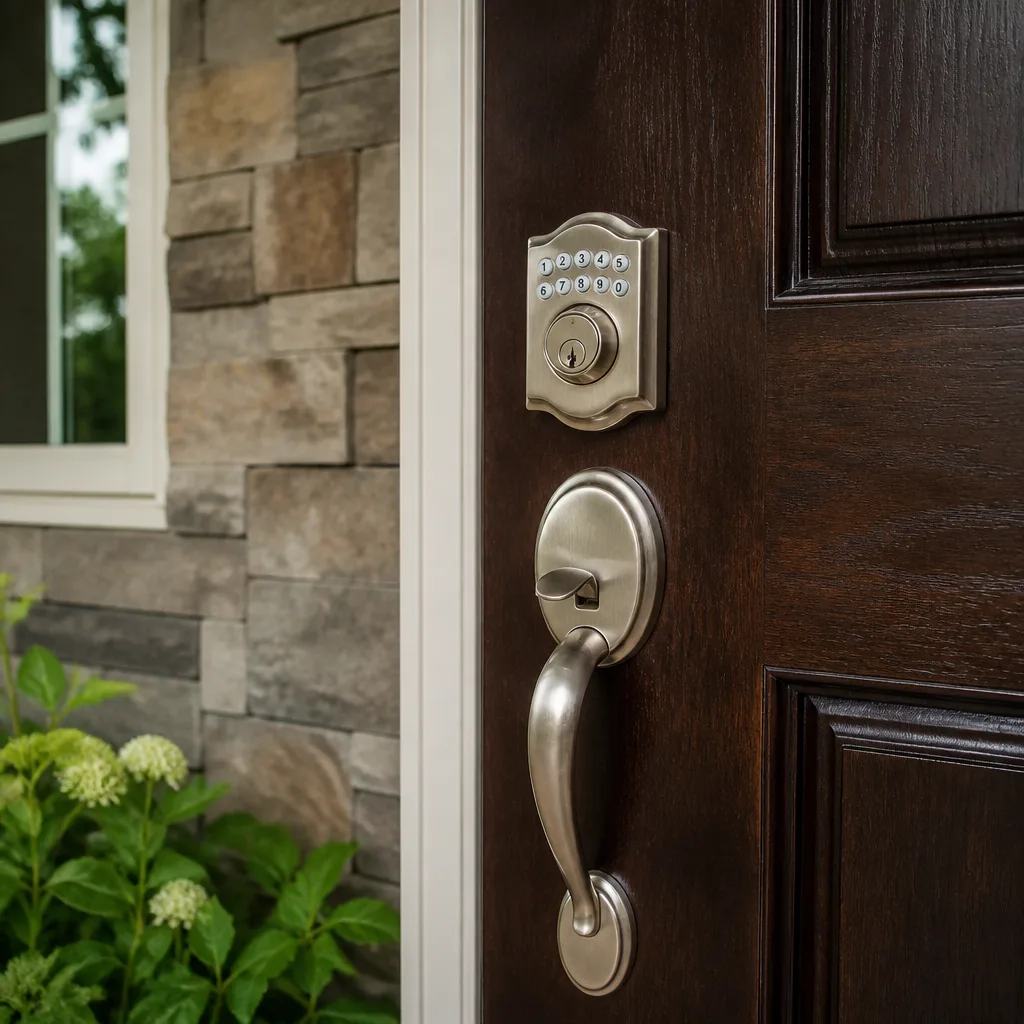 Schlage
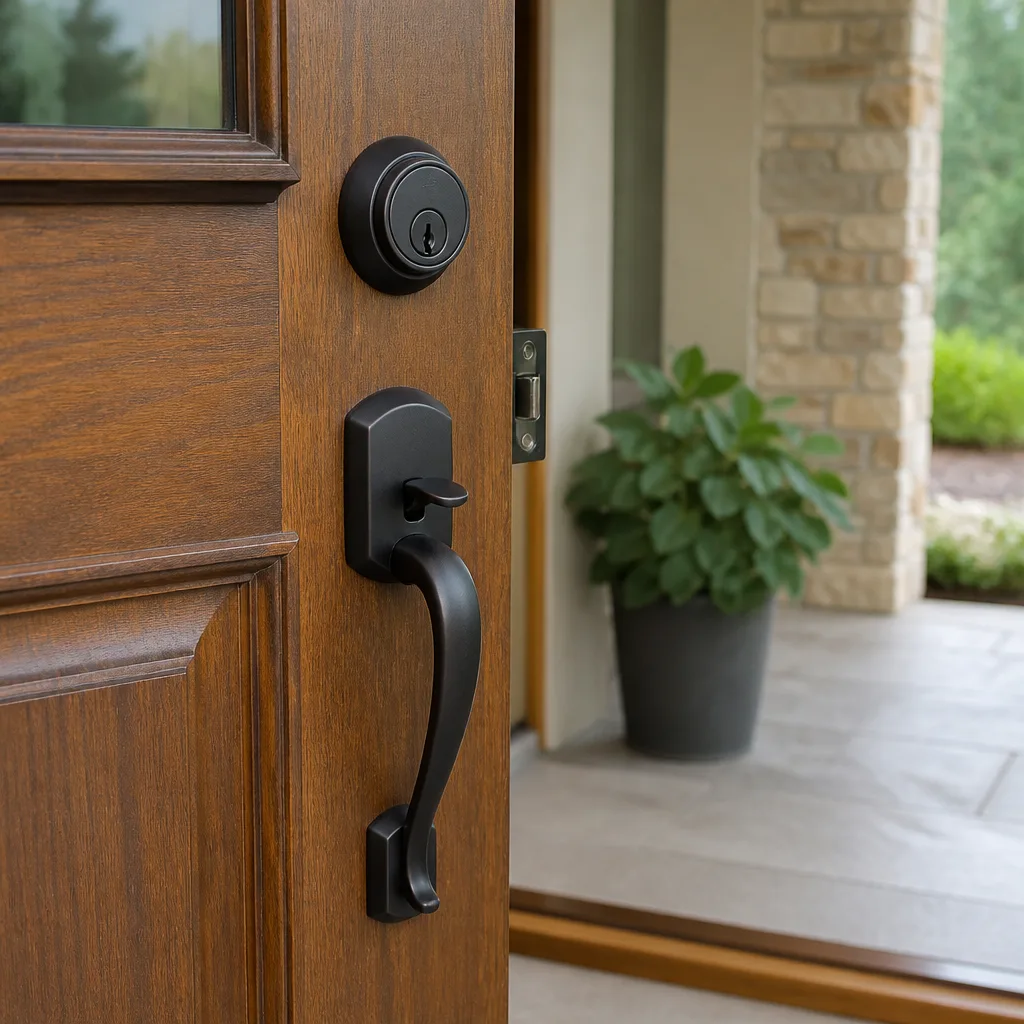 Kwikset
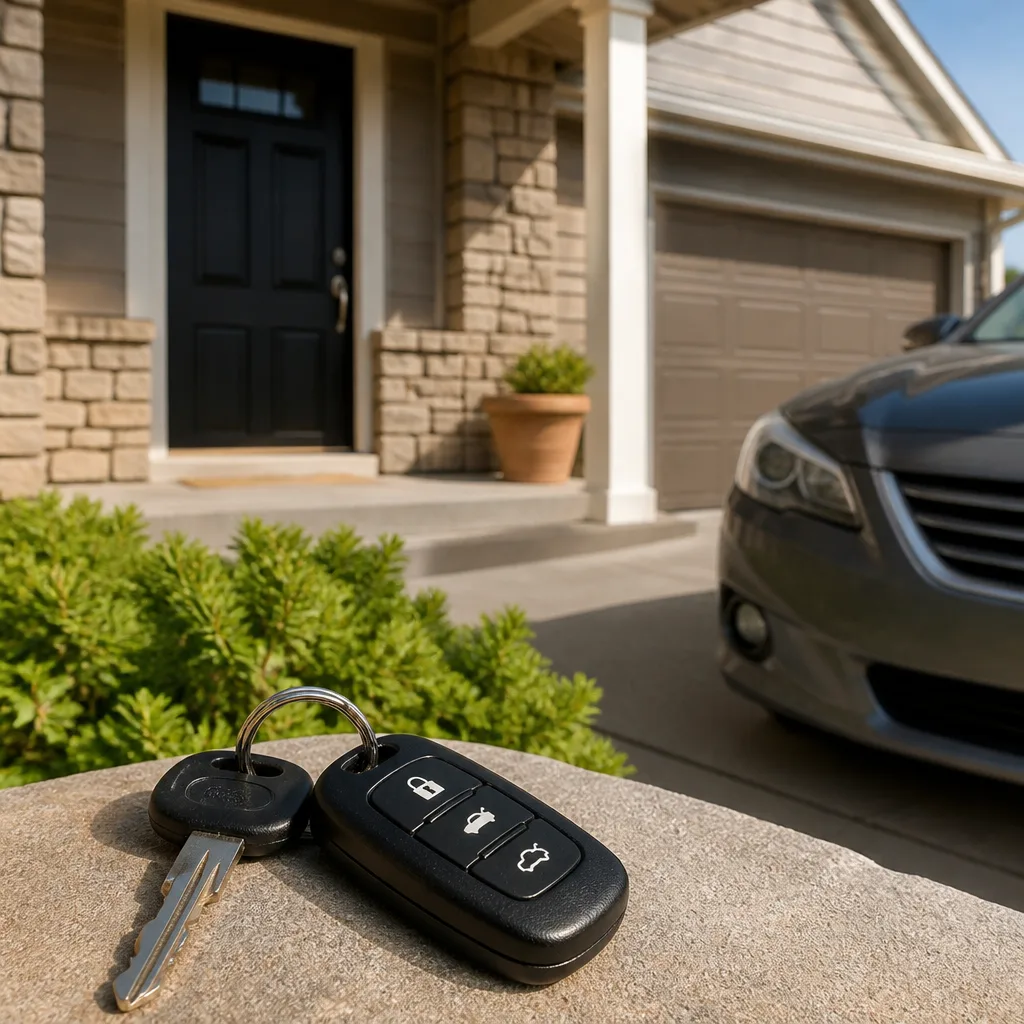 Car keys & fobs
Non-destructive entry first, always - and we re-key Schlage, Kwikset, and Baldwin locks on the spot while you watch
You get a price before we start. It does not change when we arrive. No surprises.
Get your free estimateLocksmith Warning Signs: A Anaheim Homeowner’s Reference Guide
A deadbolt that’s starting to feel stiff isn’t just annoying. It’s a cylinder under internal stress. In our experience across Anaheim, locks that show that symptom are far more likely to fail completely within 90 days. Usually at the worst possible moment: 11 p.m. on a weeknight, or right before you leave for a two-week trip. This guide and our more guides & resources teach you to read the physical, audible, and behavioral signs your locks, keys, and car transponders give off before they fail, so you can act on your schedule instead of the lock’s schedule. We’ll cover what each symptom means, how to tell a lock problem from a door frame problem, and which warning signs mean “schedule a rekey next week” versus “call today.”
Quick Answer
The most common signs your lock needs attention in Anaheim are a key that sticks or needs wiggling, a deadbolt that’s hard to throw, a cylinder that spins or feels loose, visible corrosion on the hardware, and a door that no longer lines up with the strike plate. Any of these means the mechanism is degrading, and most can be fixed with a rekey or component replacement before a full lockout happens. The short version: if your key doesn’t turn cleanly or your deadbolt doesn’t throw smoothly, call a locksmith before the lock decides the timing for you.
Styles & brands we work with
Table of Contents
- The Stiff Deadbolt: Your First and Loudest Warning
- Key Sticking and Wiggling: Reading the Residue
- Loose or Spinning Cylinder: When the Core Separates
- Door Misalignment vs. Lock Failure: The Frame Test
- Car Key and Transponder Warnings Most Drivers Miss
- Replace Soon vs. Call Today: The Severity Scale
- How to Document Lock Symptoms Before You Call
The Stiff Deadbolt: Your First and Loudest Warning
A deadbolt that takes real effort to throw is telling you one of three things, and none of them self-correct. The most common cause in Anaheim homes is internal wear: the tailpiece that connects the thumb turn to the bolt has accumulated brass dust and debris over years of use, creating friction that increases with every turn. The second cause is a strike plate that has shifted a few millimeters out of alignment, meaning you’re fighting metal-on-metal contact every time the bolt extends. The third, and least common but most serious, is that the bolt itself has begun to bend from repeated blows against a misaligned strike. A bent bolt is a ticking clock. It will jam fully extended or, worse, partially extended, and then you’re locked out with the deadbolt in a position that makes entry harder for any locksmith.
We see this pattern frequently on the Kwikset and Schlage deadbolts common throughout Anaheim’s residential neighborhoods, from the older housing stock near downtown to the tract homes in East Anaheim. Here’s what to check: throw the deadbolt five times slowly. Then throw the deadbolt five times with the door open. If it’s stiff in both conditions, the problem is inside the lock, not the frame. If it’s only stiff when the door is closed, you have an alignment problem, which is a simpler fix but should still be addressed before the bolt gets damaged. A lock that’s hard to lock is also a lock people stop locking. And a door that’s left unlocked because the deadbolt is annoying is a different kind of security problem entirely.
What it means: component wear, frame shift, or bolt deformation.
Severity: medium-to-high. Fix it before it fails.
Action: call for a rekey or cylinder service. A rekey in Anaheim often resolves the internal wear issue, and our team can tell you in minutes whether the problem is the lock or the door.
Why Anaheim’s Climate Accelerates This
Our dry heat with occasional coastal humidity swings does specific things to lock lubrication. The factory grease in a new deadbolt dries out faster in sustained heat than it would in a milder climate. When the Santa Ana winds push through in the fall, fine dust gets into exterior locks and combines with the remaining lubricant to form an abrasive paste. That paste wears down tumbler pins and cylinder walls at a measurable rate. Homeowners near the Katella corridor or along Anaheim Boulevard should expect this slightly faster than someone in a cooler coastal ZIP code, simply because of the temperature extremes and airborne particulates. We open more deadbolts than we’d like to in September and October, after a full summer of heat cycling.
Key Sticking and Wiggling: Reading the Residue
Your key should slide in and out of the cylinder with light, consistent friction. When you have to jiggle the key to get it to seat, or when it resists being pulled out, you’re feeling the physical state of the pin chambers inside the lock. What you’re reading is residue: centuries of the same principle apply, whether it’s a Schlage on a front door in Anaheim or a Baldwin deadbolt on a side gate. Every time you insert a key, you carry microscopic particles of dust, skin oil, and road grime into the cylinder. That foreign material works into the springs and between the pins, gradually making the pin stack less responsive. The wiggling you do is you applying force to overcome that friction. Over time, the more you force it, the more you wear the key and the cylinder together, a cycle that ends with a snapped key or a cylinder that seizes.
Look at your key. If the cuts are visibly worn down or the edges feel rounded compared to a newer key on the same ring, the key itself is out of specification. A worn key accelerates cylinder wear because it’s no longer lifting the pins to the exact shear line. That mismatch makes every insertion grind the pins a little more. If the key looks sharp but still sticks, the issue is inside the cylinder. Either way, the fix is usually straightforward: clean the cylinder, inspect the key, and sometimes pin a new key to the existing cylinder. A rekey is the cleaner solution when you want fresh pins and a matched key, especially if you’ve had a housekeeper, contractor, or previous resident with access.
What it means: cylinder contamination, pin wear, or a worn key.
Severity: low-to-medium if addressed early. It becomes high if you ignore it and force the key repeatedly.
Action: have the key examined and the cylinder cleaned or rekeyed.
Loose or Spinning Cylinder: When the Core Separates
The cylinder is the heart of any pin-tumbler lock. On a properly installed deadbolt or knob, the face of the cylinder should sit flush or nearly flush with the door surface, and it should not rotate independently of the door hardware. When Anaheim homeowners report that their keyhole spins in place, or the cylinder wobbles when they insert the key, we know we’re looking at one of three failures: a set screw that has backed out over years of door slams, a tailpiece broken inside the lock body, or an improperly sized cylinder installed by a previous handyman or a discount locksmith. A cylinder that spins is a lock you cannot rely on. The key may turn without engaging the bolt, meaning someone could be locked out of a door that is, from the outside’s perspective, locked but from the inside’s perspective, not.
This is the one symptom that most often gets ignored because the lock still “works” most of the time. The key turns, the door opens, and you move on. But the internal damage is cumulative. Every time the cylinder moves in its housing, it wears the retaining mechanism more. Eventually the cylinder comes out entirely, and you’re standing in front of your house holding the lock in your hand. On commercial or high-security hardware, like the Sargent or Abloy lines we service, this is even more critical because the tolerances are tighter and the failure, when it comes, is often catastrophic rather than incremental. A Sargent mortise cylinder that comes loose can jam the entire mortise body so thoroughly that the door requires a specialized extraction. The lesson? A wobbly cylinder is never cosmetic.
What it means: retaining failure, tailpiece damage, or an undersized cylinder.
Severity: high. This is a same-day repair.
Action: call us. We can often re-secure or replace the cylinder without changing your keys, depending on the hardware brand and condition.
Door Misalignment vs. Lock Failure: The Frame Test
This is where we save Anaheim homeowners from paying for the wrong repair. A lock that won’t latch cleanly and a door that’s out of alignment produce identical symptoms: you have to pull or push the door to get the latch to catch, the deadbolt grinds against the strike, and the door rattles in the frame. But the fixes are completely different. A lock problem means servicing or replacing the lock hardware. A frame problem means adjusting the hinges, resetting the strike plate, or addressing a foundation shift. If you replace the lock on a frame-shifted door, you’ve spent money on a lock that will misbehave just as badly. If you re-key but don’t fix the frame, the new pins will wear prematurely from the same lateral stress.
Here’s the frame test we use every day. Open the door about six inches and let go. If it swings open or closed on its own, the hinges are out of vertical alignment. Next, close the door slowly and watch the latch bolt. Does it hit the exact center of the strike plate? If it enters high, low, left, or right, the door is sagging or the frame has moved. Now try this: with the door closed but not locked, pull it laterally toward the jamb. If you see a visible gap grow along the latch side, the hinges are loose. Anaheim’s clay-rich soils expand and contract with moisture seasonally, which means frame shifts are more common here than in areas with sandier soil. Older neighborhoods in southwest Anaheim with mature trees are especially prone to root-driven foundation movement that shows up as a door that suddenly won’t lock. The message? Know which problem you have before spending on the fix.
What it means: either hinge wear or frame movement, not a lock component failure. But the stress from the misalignment will eventually damage the lock.
Severity: low if addressed. It becomes high because the misalignment wears out even new hardware.
Action: inspect the hinges and strike. If you’re unsure which problem you have, describe the door’s behavior on the phone. A good locksmith will ask the right questions before rolling a truck.
Car Key and Transponder Warnings Most Drivers Miss
Car keys and transponders fail in predictable ways, but most drivers don’t recognize the early signs until they’re stranded in a parking lot at Disneyland or in the Anaheim GardenWalk garage. The first warning sign is an ignition cylinder that feels notchy or requires a little extra wiggle before the key turns—something we cover in our Car Key Replacement Troubleshooting: Common Problems and How to Fix Them. That’s a worn ignition cylinder, and it’s the same mechanical principle as your front door: the wafers inside the ignition are wearing, and every forced turn makes it worse. The second sign is a remote that works intermittently at close range. Most people assume it’s a dying battery, and sometimes it is. But if a new battery doesn’t restore a crisp signal, the remote’s internal board or the vehicle’s receiver is degrading. The third sign, and the one almost nobody catches, is a transponder key that starts the car only when held at a specific angle. That’s the transponder chip losing its signal path, and it fails suddenly. We can’t stress this enough: if your car key only works when you hold it “just right,” that’s not a quirk. That’s a warning.
Here’s a real scenario we see in Anaheim regularly. A family drives from Phoenix or Vegas for a Disney trip. Their car key has been glitchy for months, but it always starts eventually. They park in a hot lot, the interior heat bakes the key and the cylinder, and the combination of heat-expanded metal and a degraded transponder chip means the key finally refuses to communicate. Now they’re on vacation, locked out of a car that’s parked in triple-digit heat, and the situation is now an emergency lockout in Anaheim requiring mobile service. The warning signs were there for weeks. Car key replacement in Anaheim is a straightforward service when done before total failure. It’s an emergency when done after.
Watch for these signs in your daily routine: the key requires more force than it used to, the door unlock button needs two or three presses, or the key occasionally doesn’t register in the ignition on the first attempt. Each is a data point. Several data points means the system is aging rapidly.
What it means: ignition cylinder wear, transponder chip degradation, or remote board fatigue.
Severity: medium now, high soon. Car key failures are binary: one day they work, the next they don’t.
Action: have a professional diagnose the key and cylinder before you’re stuck. We program and cut replacement transponder keys on-site, and our Car Key Replacement Maintenance Checklist for Anaheim Homeowners can help you stay ahead of problems.
Replace Soon vs. Call Today: The Severity Scale
Not every lock warning sign is an emergency. Some are calls you can schedule for later in the week. Others are calls you should make the moment you notice them, because they indicate a failure that’s hours or days away. Here’s how we triage the symptoms we’ve covered.
- Call today: a key that snaps off in the cylinder, a cylinder that spins freely, a deadbolt that will not throw at all, or a lock that’s been visibly tampered with. These represent immediate security or access failures, and each one is only going to get worse by morning.
- Call within 72 hours: a stiff deadbolt that’s getting harder each week, a key that requires jiggling to work, or a door that no longer latches without shoulder pressure. These are mechanical failures in progress. You might have days or weeks, but the cost of repair goes up the longer you wait.
- Schedule at your convenience: keys that show visible wear, a cylinder that wobbles slightly but still functions, or a deadbolt that’s stiff but only seasonally. These are maintenance items. Handle them before they move up this list.
- Immediate security action: you’ve recently had a roommate or tenant move out, a contractor had a key for a week, or you’ve lost a key and you can’t remember where. This is a rekey situation, not a repair situation. A rekey in Anaheim is quick, cost-effective, and restores key control. Don’t wait on this one either.
The pattern here is simple. Mechanical problems that get worse with use must be addressed before the next three weeks of normal use. Security problems created by key access must be addressed before the next time the door is locked. The lock isn’t going to heal itself.
How to Document Lock Symptoms Before You Call
The fastest way to get an accurate diagnosis and a fair quote is to describe the symptom clearly before a locksmith arrives. Here’s the documentation routine we recommend, and it takes under five minutes. First, photograph the lock from the front, the edge of the door where the bolt extends, and the strike plate on the frame. Three photos on your phone. Second, note the brand of the lock. It’s usually stamped on the face of the cylinder or on the edge of the deadbolt. Third, write down exactly what the lock does when you use it: “key turns but bolt doesn’t extend,” “deadbolt is hard to throw only when door is closed,” “cylinder wobbles when key is inserted.” The specific combination of conditions tells us a lot. A bolt that doesn’t extend with the door open is a completely different diagnosis than one that doesn’t extend only with the door closed.
Then, think about timing. Has this gotten worse over weeks or months? Did it start suddenly after a specific event, like a door slam or a break-in attempt? Did a previous lock replacement coincide with the symptom appearing? All of that is triage data. When you call us, be prepared to tell us the brand, the symptom, and whether the problem is present with the door open. We can usually narrow the possible causes on the phone and give you a real price range before anyone gets in a vehicle. That’s the difference between a partner who diagnoses and a dispatcher who just sends a truck.
Common Mistakes to Avoid
- Lubricating without cleaning first. Spraying graphite or oil into a cylinder that’s full of dust and debris just creates a wet paste that makes the problem worse. The cylinder should be cleaned before it’s lubricated, and most modern locks work best with a dry, non-petroleum lubricant.
- Forcing a key that resists. Every forced turn bends the key slightly and wears the pins harder. A key that needs force is a key that’s on its way to snapping.
- Replacing a lock when the frame is the problem. Anaheim’s shifting soils cause more door alignment issues than most homeowners realize. If the strike is misaligned, a new lock will fail the same way in less time.
- Ignoring a transponder key that only works sometimes. Intermittent remote or ignition issues never just go away. They plateau for a while, then they fail completely, and usually at the least convenient time.
- Calling a handyman for a security issue. Security-coded insurance, key control documentation, and brand-matched components matter. A generic repair that uses the wrong pin depth or the wrong tailpiece creates a future failure.
- Assuming a rekey is unnecessary after a key loss. The person who finds that key knows where it goes. Rekeying is cheap insurance against a very specific kind of vulnerability.
- Living with a wobbly cylinder because “the lock still works.” The wobble is the lock telling you its retaining hardware is failing. Once the retaining hardware goes, you’re locked out, not just inconvenienced.
When to Call a Professional
You should call a professional when any of these conditions apply: your key has snapped off in the lock, the cylinder spins without engaging the bolt, you’ve lost a key and can’t account for all copies, your car key or remote is showing intermittent failures, or you’ve tried the frame test and the problem is clearly inside the lock. You should also call if you’ve just moved into a home or rental in Anaheim and have no idea how many keys are out there. Rekeying on day one is the single best security decision a new resident can make. We offer free estimates over the phone. One call covers auto, emergency, and rekeying needs. Anaheim Locksmiths offers free estimates in Anaheim – call (855) 382-0290.
Frequently Asked Questions
If the lock mechanism works smoothly and the only concern is who has a key, you need a rekey, not a replacement. If the cylinder is loose, the bolt is bent, the key sticks even after cleaning, or the hardware is visibly corroded or damaged, you’re looking at component replacement. A good locksmith will tell you which one applies and quote accordingly.
Heat expansion is the usual culprit in Anaheim. Metal door edges and frames expand unevenly in sustained heat, which changes the alignment between the bolt and the strike plate by a few millimeters. It’s not just you, and it’s not just the lock. The fix may be a strike plate adjustment or a hinge adjustment, not a new deadbolt.
No, the remote itself doesn’t drain the vehicle battery, but a failing ignition cylinder or transponder system can cause you to cycle the ignition repeatedly, which wears the starter and the battery. If your key is becoming unreliable, address the key, not the battery.
Rekeying typically costs significantly less than replacing the lock hardware, and the price depends on the number of cylinders and whether the locks share a keyway. For an exact quote on your home or business, call (855) 382-0290. We quote flat per-cylinder pricing before work begins.
Do not push the broken piece deeper into the cylinder. If any part of the key is protruding, leave it and call for extraction. If it’s fully inside, don’t try to fish it out with tweezers or a screwdriver, you’ll likely push it further and shear a pin spring. Call an emergency locksmith in Anaheim for extraction and a new key.
Most home warranty plans in Anaheim cover lock failures that are mechanical breakdowns, but not wear-and-tear items like slowly degrading cylinders or misaligned strikes. That means a sudden, catastrophic lock failure might be covered where a stiff deadbolt that’s been getting worse for months might not. Calling sooner is usually cheaper than waiting for coverage.
The Bottom Line
Your locks, keys, and car transponders all show symptoms before they fail. The trick is knowing which symptom means what, and acting on the warning before the lock decides the timing. In Anaheim, that means watching for heat-accelerated lubricant dry-out, dust-laden cylinders during Santa Ana season, soil-shift door misalignment, and car transponder failures that show up as intermittent starting. A stiff deadbolt, a key that needs wiggling, a loose cylinder, a door that doesn’t line up: each is a message. Read it, document it, and call before the message becomes a problem. We handle the full range: rekeying, emergency lockouts, and car key replacement across consumer and high-security brands. When you’re ready, we’re here.
Written by the team at Anaheim Locksmiths, serving Anaheim since 2015.