

Last updated October 30, 2026
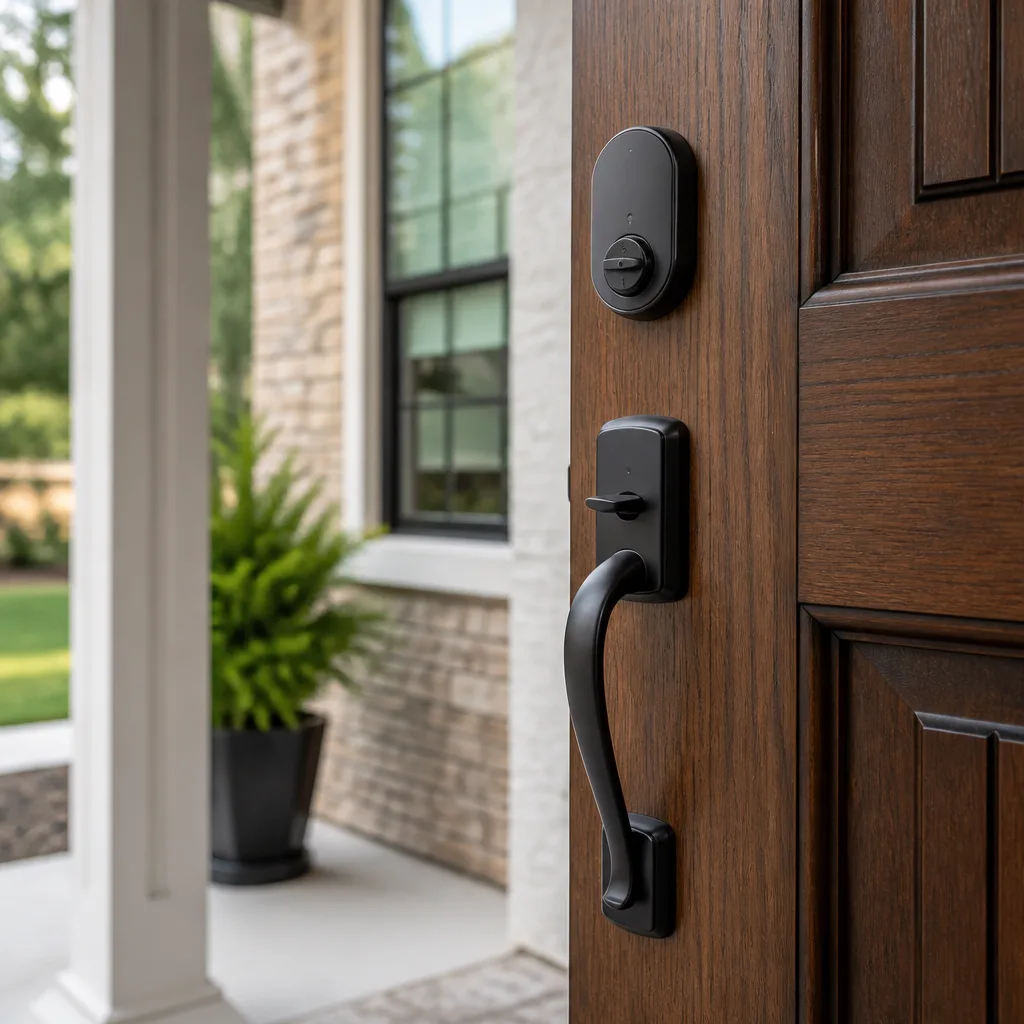 Smart locks
 House lockouts
 Re-keying
 Deadbolt upgrades
 Schlage
 Kwikset
 Car keys & fobs
Non-destructive entry first, always - and we re-key Schlage, Kwikset, and Baldwin locks on the spot while you watch
You get a price before we start. It does not change when we arrive. No surprises.
Get your free estimateDIY vs Professional Locksmith: The Anaheim Homeowner’s Decision Guide
The most expensive locksmith calls in Anaheim aren’t the 2 a.m. lockouts. They’re the extractions: removing a key that snapped off inside a worn cylinder because someone forced a turn, or rekeying a lock that was self-installed so badly it can now be opened with the wrong key. A $12 lock cylinder becomes a $280 service call fast. This guide gives you what most DIY tutorials won’t: an honest breakdown of which lock jobs a Anaheim homeowner can genuinely handle, which ones go sideways in expensive ways, and how to tell the difference before you touch a screwdriver.
Styles & brands we work with
Quick Answer
DIY locksmith work is reasonable for about three tasks: replacing a standard deadbolt, replacing an interior privacy knob, and lubricating a sticky cylinder. It’s a bad bet for anything involving transponder keys, high-security cylinders from Schlage, Medeco, or Mul-T-Lock, mortise locks, or any lock that protects an exterior door you actually rely on. In Anaheim, the real question isn’t “can I do this?” but “if this fails, what’s my exposure?” Professional service from Anaheim Locksmiths removes both the risk and the rework cost.
Table of Contents
- The Anaheim DIY Locksmith Decision Matrix
- Three DIY Lock Jobs You Can Actually Do Well
- Four Jobs That Look Easy on YouTube and Aren’t
- California Law, Anaheim Code, and Your Insurance
- The Real Cost Calculation: DIY vs Professional
- Common Mistakes to Avoid
- When to Call a Professional
- Frequently Asked Questions
The Anaheim DIY Locksmith Decision Matrix
Most DIY-versus-pro discussions treat all lock work as if it’s equally difficult. That’s the first mistake. Replacing a bedroom privacy knob and replacing a mortise cassette on a 1960s Anaheim tract home are not even in the same category. We’ve broken the ten most common lock tasks into four decision factors: DIY feasibility, property damage risk, security compromise risk, and realistic skill requirement.
| Job | DIY Feasible? | Damage Risk | Security Risk | Skill Needed |
|---|---|---|---|---|
| Replacing a standard deadbolt (Kwikset or Schlage) | Yes | Low | Low if installed correctly | Basic |
| Replacing an interior privacy knob | Yes | Low | None | Basic |
| Lubricating a sticky cylinder | Yes | Low | None | Basic |
| Rekeying a pin-tumbler lock with a kit | Sometimes | Moderate | Moderate | Intermediate |
| Car key cutting (basic, non-transponder) | Rarely | Low | Low | Specialized machine |
| Car key programming (transponder or fob) | No | High | High | Programming equipment, training |
| Installing a mortise lock body | No | High | High | Advanced |
| Installing high-security cylinders (Medeco, Mul-T-Lock, Abloy) | No | Moderate | Very High | Manufacturer-level training |
| Installing an electric strike or smart lock on an exterior door | Sometimes | Moderate | Moderate | Intermediate to advanced |
| Removing a broken key from a cylinder | Sometimes | High | Low | Patience, proper extraction tools |
Here’s the pattern most homeowners miss: the jobs with the highest damage risk are also the jobs where DIY failure costs the most to reverse. A misaligned deadbolt striker plate eventually wears the lock internals. A botched mortise installation can ruin the door itself. A broken-off drill bit inside a high-security cylinder turns a $35 rekey into a full lock replacement. The decision isn’t just about the initial task; it’s about what you’re willing to repair when the first attempt goes wrong.
Specific to Anaheim Locksmiths home territory: many of the city’s older neighborhoods, particularly around the Colony Historic District and the neighborhoods east of Anaheim Boulevard, still have original mortise locks from the 1940s through 1960s. Those locks were installed before standardized door prep existed. Drilling new holes or forcing modern hardware into those frames requires patience and familiarity with the door construction of that era. That’s not a YouTube tutorial scenario; that’s a “we’ve seen this twenty times” scenario.
In our experience, the honest breakdown for Anaheim homeowners is this: if the lock protects an exterior door and you don’t already own the exact right tools, you’re probably not saving money. If the lock is interior and decorative, go for it. If the word “transponder” appears anywhere near your car key, stop and call a professional.
Three DIY Lock Jobs You Can Actually Do Well
Let’s be precise about what “DIY-friendly” means. These three jobs have low damage risk, low security risk if done properly, and require tools most Anaheim homeowners already own or can buy for under $20.
1. Replacing a Standard Deadbolt (Kwikset, Schlage, or Yale)
This is the single best DIY entry point. Modern deadbolts from Kwikset and Schlage are designed for standardized door prep: the 2-1/8 inch bore and 1-inch cross bore that nearly every American home has. The process is straightforward:
- Remove the interior thumb turn by taking out the two mounting screws.
- Pull both halves of the old deadbolt out of the door.
- Slide the new bolt assembly into the edge of the door. Make sure the word “UP” on the bolt face is pointing up.
- Insert the new keyed cylinder from the exterior side.
- Attach the interior thumb turn and tighten the mounting screws.
- Test with the door open first, then closed.
The one point where people fail: the mounting screws don’t need to be torqued down like a head bolt. Over-tightening flexes the lock body and causes binding. Snug is right. This job takes about 30 minutes for a first-timer, and the result is every bit as secure as a professional installation because the door prep is standardized.
2. Replacing an Interior Privacy Knob
These are the bedroom and bathroom knobs with the little push-button or twist lock on the inside. No security at stake, no cylinder, no key. The entire job is done with a Phillips screwdriver. Remove the two screws on the interior side, pull the knobs apart, slide the new latch in, reassemble. Most privacy knobs use the same universal latch design, so the new hardware drops right into the old holes.
3. Lubricating a Sticky or Squeaky Cylinder
Anaheim’s dry summers and occasional marine-layer mornings mean lock cylinders collect fine dust that gunks up the pins and springs. The fix is cheap and satisfying:
- Buy a dry graphite lubricant or a PTFE-based lock lubricant. Do not use WD-40; it’s a solvent that flushes away lubricant and attracts more dust.
- Insert the nozzle into the keyhole and give a short burst.
- Insert and remove the key several times to distribute the lubricant.
- Wipe the key clean and test.
If the lock is still stiff after two applications, the issue is probably a bent key or a failing pin spring, and that’s the point where amateur troubleshooting usually causes real damage. Stop, reassemble, and call a pro.
Four Jobs That Look Easy on YouTube and Aren’t
1. Transponder Key Programming
Modern car keys are not just cut metal. Since the late 1990s, nearly every vehicle sold in the United States has a transponder chip embedded in the key head. The car’s computer reads that chip before it will allow ignition. Programming a new transponder key requires diagnostic equipment that talks to the vehicle’s body control module or engine control unit. If you try to bypass this by cutting a cheap metal copy, the car will crank but not start. If you try to program it yourself with an aftermarket tool, you risk corrupting the vehicle’s immobilizer system, which can leave the car undriveable until a dealer or a properly equipped locksmith resets it. Car Key Replacement in Anaheim is one of the core services at Anaheim Locksmiths precisely because the programming requirement is a technical barrier most generalist locksmiths don’t cross, let alone most homeowners.
2. High-Security Cylinder Installation (Medeco, Mul-T-Lock, Abloy, Sargent)
High-security locks from Medeco, Mul-T-Lock, Abloy, and Sargent are not just standard pin tumblers with a fancy logo. They use side pins, angled cuts, magnetic elements, or rotating disc mechanisms that require precise installation and precise adjustment. A Medeco cylinder that’s a quarter-degree out of alignment will bind. A Mul-T-Lock’s telescoping pins will jam if the plug isn’t cycled correctly after rekeying. These mechanisms also require key blanks that are restricted: only authorized dealers can duplicate them, and the blanks themselves are cut to tolerances that standard key machines can’t hit. If you attempt to rekey or install one of these and something binds, you won’t just ruin a $45 cylinder. You’ll be locked out of your own door and the fix may require drilling the cylinder out entirely.
3. Mortise Lock Installation or Repair
Mortise locks, common on Anaheim homes built before the 1970s and on commercial storefronts throughout the city, are entirely different from the bored cylindrical locks most tutorials assume. The lock body is a rectangular cassette that slides into a precisely mortised pocket in the edge of the door. If your door doesn’t already have that pocket, you’re not installing one with a drill and a chisel on a Saturday afternoon. You’re machining a structural opening in a door edge, getting it square, getting the depth right, and aligning it with the existing keyhole and thumb turn. Done wrong, the door is compromised and the repair bill includes door replacement, not just lock replacement. Even simple mortise lock repair, like a broken spring or a sticky deadbolt throw, requires disassembling the cassette without losing tiny, specific parts that haven’t been manufactured in decades.
4. Electric Strike Installation on a Smart Lock Setup
Smart locks and electric strikes are the growth area in Anaheim security hardware, but they’re an electronics job, not a mechanical locksmith job. The strike wiring must be run through the door frame cleanly, connected to the controller or smart home hub without shorts, and aligned so the deadbolt or latch bolt throws fully into the strike opening. A misaligned strike means the lock thinks it’s locked when the bolt is only halfway engaged, which is the same thing as not locking at all. And because the door frame is wood, every mistaken drill hole is a permanent scar. If you’re modifying a door that came with the house, especially a rent-controlled Anaheim apartment unit, you may also be violating the lease. Check first.
California Law, Anaheim Code, and Your Insurance
Most DIY lock work won’t get you in legal trouble directly, but it can void your insurance claim or create a landlord dispute. Here’s what actually matters in Anaheim:
Renters: California Civil Code Section 1941.3 requires landlords to provide working locks on all exterior doors. If you’re renting in Anaheim, you don’t own the locks, and you generally don’t have the right to replace them without written permission. Some landlords will allow it. Most won’t. If you drill out a cylinder and ruin the lock, you’re paying for the replacement, and the landlord gets to choose who installs it. That’s a losing negotiation.
Homeowners and insurance: Your homeowner’s insurance policy covers burglary and property damage claims based on the condition of the entry points at the time of the loss. If a lock was self-installed and the insurer’s adjuster determines it wasn’t functioning correctly, your claim can be denied or reduced. Insurers don’t require proof that a licensed locksmith did the work, but they do require that the lock operated as intended. A deadbolt that’s misaligned, a striker plate that doesn’t fully engage, or a self-installed smart lock that was never properly calibrated all create a path for the insurer to assign partial fault. The cost of a professional installation is trivial compared to the potential claim denial.
Anaheim-specific note on salt and moisture: if you live within a few miles of the coast where marine air reaches Anaheim on foggy mornings, or in areas with older irrigation systems that keep soil moisture high, steel lock components on exterior doors corrode faster than they do in inland Orange County. A lock that’s been in service for a decade may look fine on the outside and be dangerously brittle internally. If you’re doing DIY work and a screw head strips out, a tailpiece snaps, or a cylinder won’t turn smoothly, that’s age and corrosion, not user error. It’s also a clue that you’re working on a lock that should probably be replaced wholesale.
The Real Cost Calculation: DIY vs Professional
The online debate frames this as “a $20 lock and an hour of my time versus a $150 locksmith bill.” That calculation leaves out the rework risk and the tool cost, which are the two real drivers of whether DIY saves money. Let’s break it down honestly for three common scenarios.
Scenario 1: Replacing a Standard Deadbolt
DIY: New Kwikset or Schlage deadbolt runs $25 to $45 at any Anaheim hardware store or big-box retailer. You already own a Phillips screwdriver. Time: 30 to 60 minutes if everything goes well. Risk: low. Realistic cost: $25 to $45.
Professional: Flat-rate deadbolt replacement typically runs $75 to $130 in the Anaheim market, including the lock and the labor. The professional result is guaranteed and the old lock is disposed of. Realistic cost: $75 to $130.
Verdict: DIY wins if you’re comfortable with a screwdriver and the door prep is standard. This is the rare case where the amateur job is genuinely equivalent to the professional one.
Scenario 2: Rekeying a Home After a Tenant Moves Out
DIY with a rekey kit: A generic pin-tumbler rekey kit costs $15 to $40. Time: two hours minimum for a first-timer, longer if you knock the pins out of the cylinder and have to reassemble. Risk: moderate to high. If you rekey incorrectly, your old key may still work or the new key may not. A dropped spring or pin that rolls under the refrigerator means ordering a rebuild kit or replacing the lock anyway. Realistic cost: $15 to $40 plus four to six hours of your time plus the cost of a replacement lock when you eventually give up.
Professional: Rekey Locks in Anaheim service through Anaheim Locksmiths runs on a per-cylinder basis. You’re paying for the labor, the new pins, and the guarantee that only the new key works. A typical three-lock home rekey is done in under an hour. Realistic cost: $50 to $90 depending on cylinder count.
Verdict: Professional wins unless you’ve rekeyed a lock before and you own a proper pinning tray and follower. The first-timer rekey failure rate is high, and you don’t know you made a mistake until two weeks later when a key you thought was dead still turns the lock.
Scenario 3: Car Key Replacement
DIY: For a non-transponder metal key, a hardware-store duplicating machine can cut a copy for $3 to $8. For a transponder key or fob, you’re not cutting it yourself. You’re buying a blank online ($15 to $40), then calling around to find someone with the programming equipment to pair it to your car. Many dealerships won’t program a self-purchased key, and the mobile programmers who will charge $50 to $100 on top of the blank. Realistic cost: $65 to $140 and multiple hours of coordination, with no guarantee the blank you bought is compatible.
Professional: Anaheim Locksmiths handles Car Key Replacement in Anaheim as a single flat-rate service. The key blank and the programming are both included in the quoted price, which is stated on the phone before anyone is dispatched. Realistic cost: comparable to or less than the DIY path by the time you add up the blank, the programming fee, and the value of your time.
Verdict: Professional wins for transponder keys. DIY only makes sense if your car is old enough to use a plain metal key and you only need a spare, not a functional daily key.
One thing we tell every Anaheim homeowner who calls: the price we quote on the phone is the price on the invoice. No call-out surcharge added on arrival, no upsell at the door. The industry has a bait-pricing problem where a $19 “service fee” becomes $240 by the time the job is done. We quote the full price up front, and that’s what you pay. If you’re comparing DIY to professional, compare against the real professional price, not the teaser rate.
Common Mistakes to Avoid
- Using WD-40 on a lock cylinder. It’s a solvent, not a lubricant. It flushes out the existing grease and leaves a residue that traps dust. In Anaheim’s dry, dusty conditions, that means a lock that gets stiffer, not smoother. Use dry graphite or PTFE.
- Forcing a key that’s starting to stick. A key that requires jiggling is telling you something. The pins are worn, the key is bent, or the cylinder is failing. Forcing it is how keys snap off inside the cylinder, which turns a $15 repair into an extraction job.
- Over-tightening lock mounting screws. This flexes the internal components and causes binding, sticking, and premature wear. Snug is the target, not tight.
- Buying a “universal” smart lock without checking your existing door prep. Not every Anaheim door is standardized. Older homes with mortise locks won’t accept a cylindrical smart lock without major modification. Confirm your bore size before you order anything.
- Rekeying “to save money” without understanding what rekeying actually does. Rekeying changes which key operates the lock. It doesn’t upgrade the lock’s security, and it doesn’t fix a worn cylinder. If the lock is old, stiff, or damaged, rekeying is a bandage on a structural problem.
- Throwing away the original screws and hardware during a DIY lock swap. Factory mounting screws are often machine-threaded and sized specifically for that lock body. The generic screws that come in the replacement package are sometimes an inch too long or too short. Keep the originals until the job is done.
- Drilling out a high-security cylinder yourself. If you own a Medeco, Mul-T-Lock, or Abloy cylinder and you’ve lost the key, attempting to drill it out will destroy the cylinder body and often damage the door surrounding it. High-security steel and hardened inserts are designed to resist drilling. The drill bit will walk, the housing will scar, and the eventual professional repair will cost double what a clean extraction would have.
When to Call a Professional
Call a locksmith when the lock you’re about to work on is the only thing standing between your family and a street-facing door. Call when the word “transponder,” “mortise,” “high-security,” or “electric strike” appears anywhere in the task description. Call when you’re locked out and the sun is down and you’re standing in your Anaheim driveway holding a dead cell phone and a bad plan. Call when the DIY attempt has already failed and you’re staring at a half-disassembled lock, a stripped screw, and a door that won’t close. We’ve rebuilt more DIY projects than we’ve done from-scratch jobs in some neighborhoods. Emergency Locksmith in Anaheim service exists for exactly these moments. Anaheim Locksmiths offers free estimates in Anaheim, call (855) 382-0290 and we’ll give you a straight answer, whether the job is one we should do or one we’ll tell you to handle yourself.
Frequently Asked Questions
A standard deadbolt replacement in Anaheim typically runs $75 to $130 including the lock and labor when done professionally. A high-security cylinder replacement from Medeco or Mul-T-Lock will run higher because the hardware itself is more expensive and the installation requires specialized training. DIY replacement costs $25 to $45 for the hardware, but if the installation fails, you pay for removal, repair, and re-installation. Call (855) 382-0290 for an exact quote. Estimates are free.
Yes. At Anaheim Locksmiths, the price quoted before dispatch is the price on the invoice. We don’t add a call-out fee on arrival, and we don’t pad the bill with service charges that weren’t discussed. The quote covers the labor, the hardware if applicable, and any needed cleanup. If the job turns out to be simpler than expected, the price goes down. If it’s more complex, we tell you before we proceed.
You can, but for most first-timers the failure rate is high and the mistake isn’t obvious until days or weeks later when an old key still works. A professional rekey in Anaheim is fast and inexpensive relative to the cost of redoing a failed DIY rekey. Rekey Locks in Anaheim covers all major residential and commercial brands in a single visit.
For a transponder key or keyless fob, yes. The programming requires diagnostic equipment that communicates with the vehicle’s immobilized system, and a failed DIY programming attempt can leave the car unable to start. Car Key Replacement in Anaheim handles the blank, the cutting, and the programming as one service.
High-security locks from brands like Medeco, Mul-T-Lock, and Abloy use mechanisms that resist picking, bumping, and drilling far more effectively than a standard pin-tumbler cylinder. They also use restricted key blanks that can’t be copied at a hardware store. High-security brands, handled right, require locksmiths with manufacturer-level training and specialized tools.
Yes. Emergency locksmith service is one of our core offerings, and response is not limited to business hours. If you’re locked out or facing a security emergency, call (855) 382-0290 and we’ll talk through the situation and give you a clear price before anyone is dispatched.
Written by the team at Anaheim Locksmiths, serving Anaheim since 2015.